
Guadeloupe

A butterfly-shaped French island with a volcano, rainforest waterfalls, Creole food and a string of smaller islands to explore.

Back to the Caribbean map

Guadeloupe at a glance

Guadeloupe is an overseas region of France, which means it is part of the European Union and uses the euro. From above, the main island looks like a butterfly with two wings. The western wing, Basse-Terre, is mountainous and green, with the La Soufrière volcano, rainforest trails and the Carbet waterfalls.

The eastern wing, Grande-Terre, is flatter and lined with beaches, especially around Sainte-Anne and the dramatic rocky tip of Pointe des Châteaux. Smaller islands nearby, including Les Saintes, Marie-Galante and La Désirade, are easy day trips or quiet overnight escapes.
Getting there from Jamaica

Guadeloupe's main airport at Pointe-à-Pitre has many flights from Paris, as well as regional flights around the French Caribbean and some service from North America. From Jamaica, expect to connect through another hub.

Guadeloupe follows French entry rules, which are different from the Schengen area rules for mainland France, so check what your passport requires.

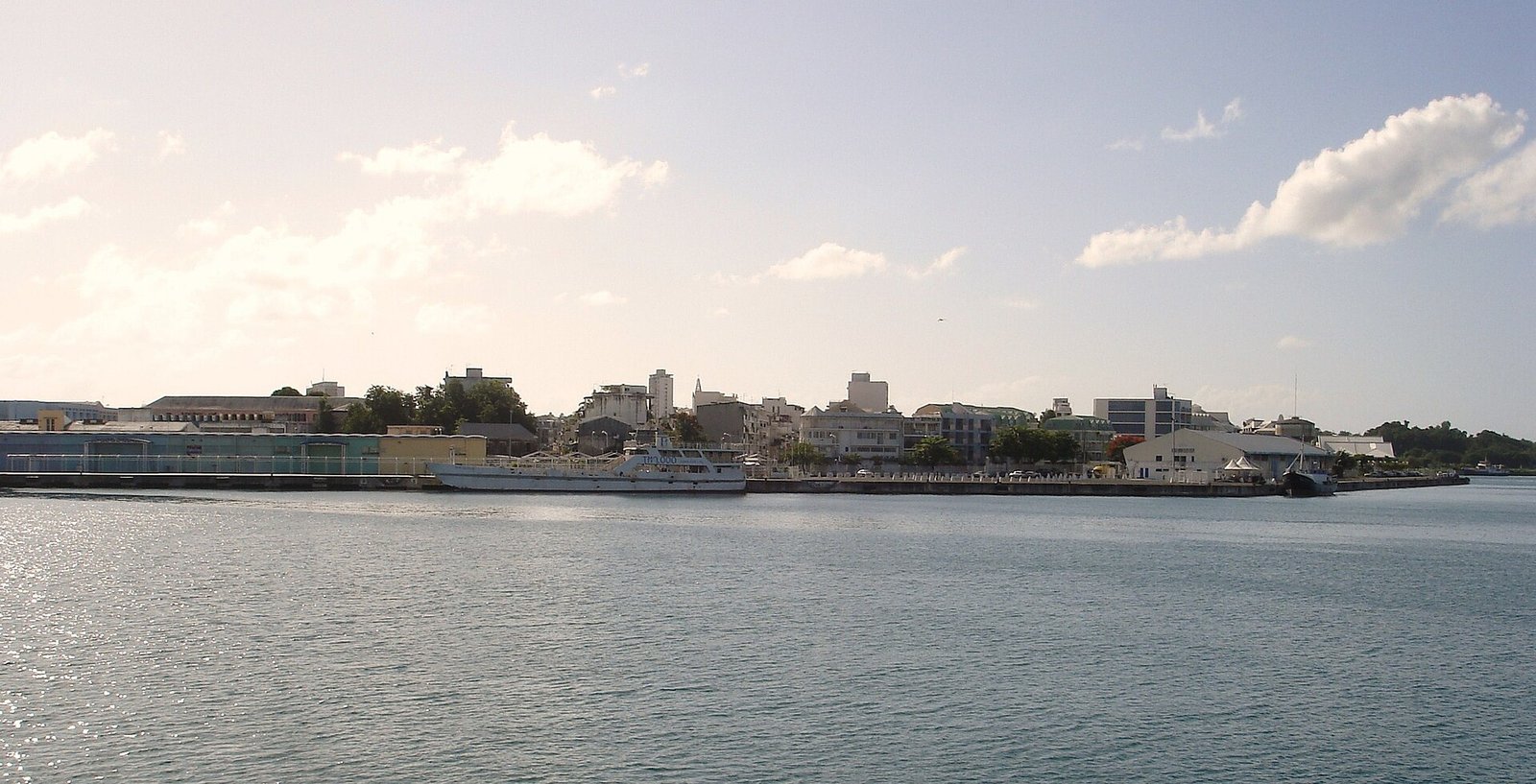
Pointe-à-Pitre

How it compares to Jamaica

Guadeloupe has the mountains, rivers and waterfalls that Jamaicans will recognize, plus beaches to match. But the culture is French and Creole. People speak French and Guadeloupean Creole, the music is zouk and gwoka drumming, and the food is a delicious mix of French and West Indian: accras (saltfish fritters), colombo (a local curry), and fresh baguettes.

Rum here is often rhum agricole, made from fresh sugar cane juice rather than molasses. In Pointe-à-Pitre, the Mémorial ACTe is a major museum on the history of slavery in the Caribbean.

Photo: Zivax via Wikimedia Commons, CC BY-SA 3.0

Top things to do

  • Hike La Soufrière for views over the island, weather permitting.
  • Visit the Carbet Falls in Guadeloupe National Park.
  • Snorkel the Cousteau Reserve around the Pigeon Islands.
  • Take the ferry to Les Saintes for a day on Terre-de-Haut, one of the prettiest bays in the Caribbean.
  • Explore the Mémorial ACTe in Pointe-à-Pitre.
  • Tour a rum distillery on Marie-Galante, known for its strong rhum agricole.

January to April is dry and pleasant. Carnival in February and March fills the streets with music.

Where to stay

For beaches and restaurants, many visitors stay in Sainte-Anne, Saint-François or Le Gosier on Grande-Terre. For hiking and nature, Deshaies on Basse-Terre has beaches, botanical gardens and easy access to the rainforest, and Bouillante is close to the Cousteau Reserve. A night or two on Les Saintes or Marie-Galante gives you the smaller islands once the day-trippers leave. Villas and small guesthouses, called gîtes, are common and often good value.

Before you go

  • Currency: euro
  • Languages: French and Guadeloupean Creole; English is less common outside hotels
  • Driving: right-hand side
  • Best for: hikers, food lovers, divers and travelers who want the Caribbean with a French twist

Offshore from Basse-Terre, the Cousteau Reserve around the Pigeon Islands is one of the best places for snorkeling and diving. A few words of French will go a long way.