
Cayman Islands

Three quiet, polished islands northwest of Jamaica, known for Seven Mile Beach, world-class diving and a large Jamaican community.

Back to the Caribbean map

The Cayman Islands at a glance

The Cayman Islands are three low, flat islands, Grand Cayman, Cayman Brac and Little Cayman, sitting about 190 miles northwest of Jamaica. Grand Cayman is where nearly everyone lives and visits. Its famous Seven Mile Beach is calm, clean and lined with hotels and condos, and the capital, George Town, is a major cruise and financial center.

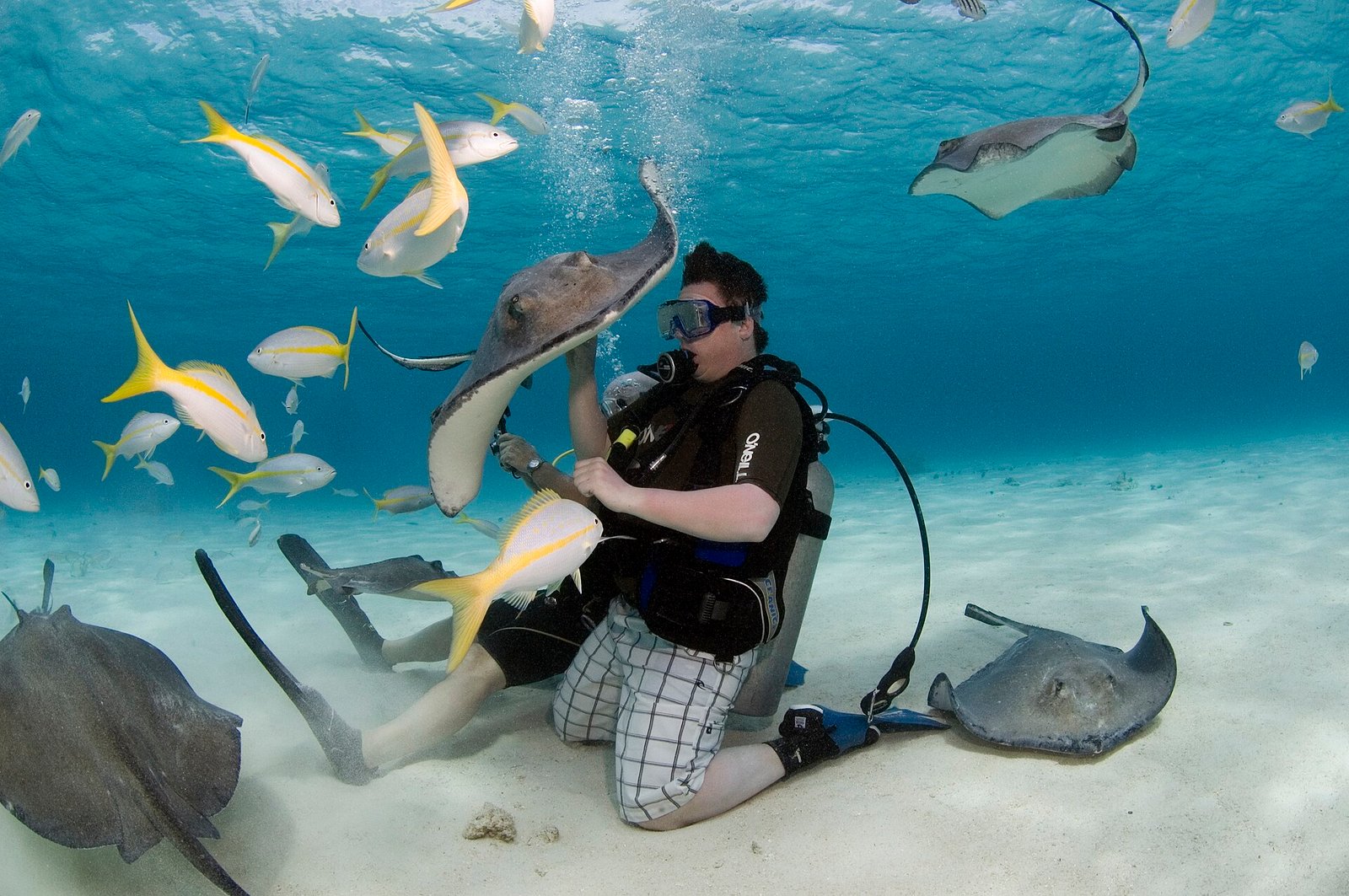
Out on the water, Stingray City is one of the Caribbean's best-known experiences: a shallow sandbar where you stand waist-deep while southern stingrays glide around your legs. The two smaller "Sister Islands" are all about diving, especially Bloody Bay Wall off Little Cayman, where the reef drops off into deep blue water.
Getting there from Jamaica

Cayman is one of the easiest islands to reach from Jamaica. Cayman Airways has long connected Grand Cayman with Kingston and Montego Bay, with a flight time of about an hour. Check current schedules before booking.

Jamaican passport holders generally need a visa to visit the Cayman Islands, so check the current entry rules well ahead of time. US and Canadian visitors typically do not.

Stingray City, Grand Cayman

How it compares to Jamaica

If Jamaica is lively and full of character, Cayman is orderly and calm. Roads are smooth, crime is low, and everything works. You will also hear plenty of Jamaican accents, because many Jamaicans live and work in Cayman, and Jamaican food is easy to find.

The big difference is cost. Cayman is one of the most expensive places in the Caribbean. Groceries, restaurants and hotels can easily run double what you would pay in Jamaica. There are no big mountains, rivers or waterfalls either; the beauty here is all beach and sea.

Photo: Kfulgham84 via Wikimedia Commons, CC BY-SA 3.0

Top things to do

  • Stand with stingrays at Stingray City and snorkel the nearby Coral Gardens.
  • Dive or snorkel the wreck of the USS Kittiwake, sunk off Seven Mile Beach as an artificial reef.
  • Kayak a bioluminescent bay on the north side at night.
  • Visit Hell, a patch of jagged black limestone in West Bay with its own post office for postcards.
  • Drive the quiet East End for blowholes, fishing villages and roadside food stands.

December to April brings the driest weather and the highest prices. Early summer is quieter and cheaper.

Where to stay

Seven Mile Beach is where most visitors stay, with everything from big resorts to condos and walkable restaurants. West Bay, at the north end, is quieter and close to good snorkeling. For a slower, more local side of Grand Cayman, look at small hotels and rentals in East End or North Side, near Rum Point. Divers often skip Grand Cayman entirely for a small dive resort on Little Cayman or Cayman Brac. Condos with kitchens help keep costs down on such an expensive island.

Before you go

  • Currency: Cayman Islands dollar (KYD), worth more than the US dollar; US dollars are accepted almost everywhere
  • Language: English
  • Driving: left-hand side, same as Jamaica
  • Best for: divers, families, travelers who want safe and easy, and anyone visiting friends or family working there

Look out for the endangered blue iguana, found only on Grand Cayman, at the Queen Elizabeth II Botanic Park. Rum Point on the north side is a relaxed spot to spend a lazy afternoon away from the busier west coast.